Partnering with Anthony Nolan to improve quality of life for children who have received cell therapies
8 May 2026, 9 a.m.
We’re excited to announce a new research partnership with Anthony Nolan designed to improve the care offered to children and young people who have had cell therapy treatments.
Meet Harley
Children like Harley show why this work is so urgently needed.
In spring 2018, eight-year-old Harley suddenly became lethargic and spiked a temperature. After a trip to his local hospital, Harley was transferred immediately to Great Ormond Street Hospital (GOSH), where he was diagnosed with acute lymphoblastic leukaemia.
Harley went through many forms of treatment over the three years he was at GOSH, including a bone marrow transplant in autumn 2020.
His mum, Rachael, says:
“Robin ward [GOSH’s bone marrow transplant ward] is very strict on hygiene and cleanliness, obviously because the children's immune systems are completely wiped out. The smallest bug they pick up can be catastrophic. We spent three months in there.
“There was literally only one day through the whole of his experience - during the transplant process, which was the hardest part of his treatment - when he said some really sad things, about it ‘just being too hard’. You could just see him suffering. He'd been through weeks and months of this gruelling treatment, and he mentally just didn't have that resilience for that one day.
“We were almost ready to go home when unfortunately, Harley ended up contracting graft versus host disease (GvHD). GvHD often happens after bone marrow transplant because the body recognises that a foreign entity has entered the body; in this case Harleys donor cells. Therefore, Harley’s cells begin to attack. It often occurs in the stomach/gut, which is why sickness, diarrhoea is common and can be life threatening. Harley stopped eating for a good month and had to receive IV nutrition. He had ulcers all around his mouth and he couldn’t swallow.
“Harley has shown so much resilience, I’m immensely proud of him.”
“As a parent that has travelled the oncology journey for a number of years now, I have my own experience as well as the stories of many other families we have met along the way. It is quite evident to both professionals and parents that the initial cancer itself is not what causes long term side effects or even the death of a child, but the drugs and treatment itself resulting in comprised immune systems."
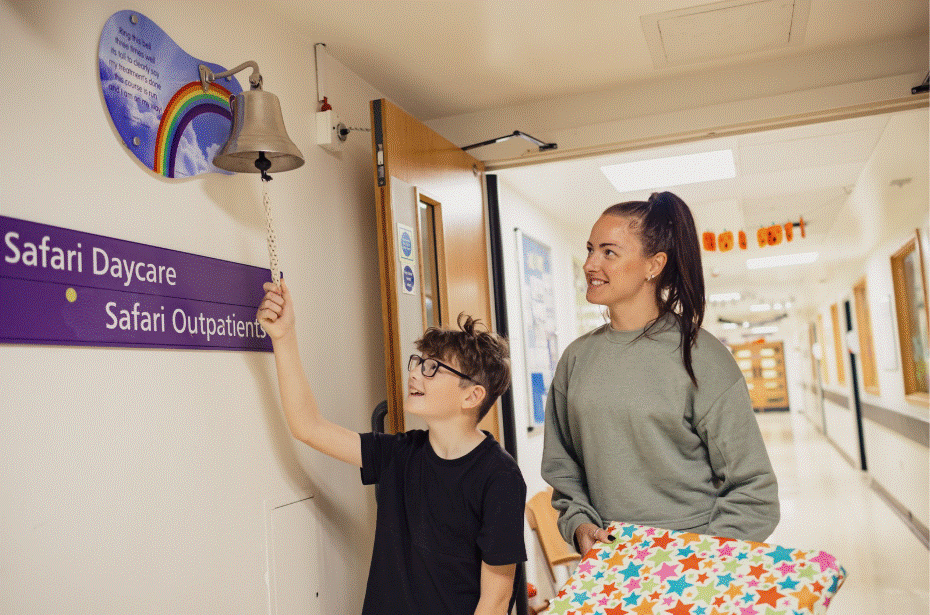
Harley is now six years post-transplant, and his leukaemia is undetectable. He finishes school next year and is looking forward to studying creative media at college.
Cell therapy treatments
Harley’s story shows that cancer and immune conditions in children and young people can bring many challenges, affecting both their health and everyday life.
Despite this, there has been a lack of investment for finding tailored treatments for children and young people. More research is needed to make these kinder, reduce side effects and help young patients live a full life.
There have been some much-needed breakthroughs that have improved survival. Cell therapies, including stem cell or bone marrow transplants and CAR T-cell therapy (where a patient’s immune cells are genetically modified to find and kill cancer cells) help hundreds of children and young people with blood cancer or genetic disorders in the UK each year.
The long-term effects of cells therapies
Although cell therapies can be lifesaving and give young patients new treatment options, they can also leave children with long-term side effects. These include diabetes, heart conditions, cognitive impairment and can impact growth and fertility. This is alongside the intense psychological impacts that often happen at a critical stage in a young person’s development, and can stay with them throughout their lives.
There is currently a gap in services. Children and young people need tailored, consistent and sustained support to not only survive, but thrive.
Yet supportive care varies widely across the UK and there’s no way to measure how effective it is. As more young patients receive advanced cell therapies, understanding their long-term support and care needs is becoming increasingly urgent.
“We as a family were warned at the start of each level of treatment of the potential side effects. We were warned that we would have to see our child’s body reach the ‘edge of death’ to complete treatment and see him healed of the disease. This in itself, I believe, has been the most traumatic experience, but also there continues to be side effects into later life even following active treatment. This is why Harley will continue to be monitored by the late effects team who measure hormone imbalances, growth and fertility.”
This partnership
To help bridge the gap in supportive care, Great Ormond Street Hospital Charity (GOSH Charity) and Anthony Nolan, two leading health charities, have joined forces to carry out a two-year research project.
This project is designed to improve the quality of life for children and young people who have received cell therapies, and address their supportive care needs.
With Anthony Nolan and GOSH Charity’s combined experience in supporting young people going through cell therapies, we are uniquely placed to investigate both what support patients and their families need, and how to put these services into practice.
The project will be delivered by Anthony Nolan and fully funded by GOSH Charity. Through in-depth interviews with children, young people and their carers, researchers will explore what support is currently available and where gaps remain, both during and after treatment. The project will also assess how this support varies across the UK.
By developing better ways to measure the impact of supportive care on quality of life and overall patient experience, it aims to provide evidence-based recommendations that could help the NHS improve recovery and long-term wellbeing for children and young people.
This funding aligns with one of the priorities in our £70 million research strategy - improving the everyday experience of children living with a rare or complex disease.